Additional information
Quietly redrawing the boundaries of African folk music
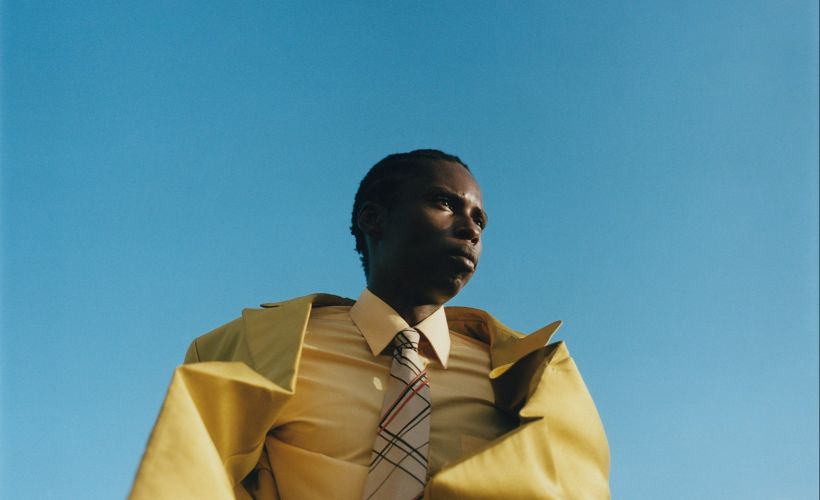
Bongeziwe Mabandla sings almost entirely in isiXhosa, and his audience, in Berlin, inVancouver, in a restored henequen plantation outside Mérida, sings every word back.That's the trick of it, and the point of it. The language is a door, not a wall.
He was born in Tsolo, a small town in the rural Eastern Cape, and raised on the soft-loud architecture of church choirs, Bantu folk songs, and a household where music was apart of every day. The guitar arrived at seventeen. Drama school in Johannesburg followed, then a quiet pivot: songs, open mics, his 2012 debut Umlilo, and a Top 10 finish at France's Prix Découvertes RFI before most South African listeners had caughtup.
The real engine of the catalogue, though, is his partnership with Mozambican producer and instrumentalist Tiago Correia-Paulo. Tiago has been the architect alongside him since Mangaliso -the 2017 album that won Best Alternative at the SAMAs and established the formula that still holds: Mabandla's guitar and tenor at the centre, Correia-Paulo's electronics blooming around them. iimini (2020)- a song-cycle about a relationship's unspooling, dropped one day after South Africa's hard lockdown began, landed on American Songwriter's Top Albums of the Year and got NPR calling it "agorgeous saving grace in trying times." amaXesha (2023) was named The Guardian's Global Album of the Month.
Ndingubani "Who am I?" in isiXhosa, was released 11 June on Black Major. It's the fourth album with Correia-Paulo, and his most introspective: songs about leaving Tsolofor music, the years of pursuit and betrayal that followed, a cancer scare and there calibration it left, depression imagined as a prison whose gates might finally open. Cameroonian songwriter Blick Bassy joins him on "Ndinje," a song about accepting theparts of yourself you once couldn't. The European leg of the tour wrapped to sold-outrooms in Berlin, Paris, Zurich, and Bristol; the South African run is mid-flight; ReunionIsland and Womad Glasgow follow.
Mabandla is, by now, a magnet for collaborators who want a piece of the frequency. Spoek Mathambo on the SAMA-winning "Bawo Wam." Sun-El Musician and Claudio xKenza on "Sala Nabani." amaXesha Remixes (2025) handed the album to Da Capo,Lemon & Herb, Karyendasoul, Mpho.wav, German house elder Henrik Schwarz, andamapiano's Ntokzin whose "Sisahleleleni" rework picked up its own SAMA nomination and won Best African Pop at the Metro FMs. Outside music, the world keeps tugging: arole in the acclaimed Shaka iLembe, fashion collaborations with Thebe Magugu and Nao Serati.
What you notice at his shows is the obsession. The shows fill with people who arrived already knowing the lyrics, who have decided, without quite being able to explain why, that this music belongs to them. Mabandla calls it Xhosa soul. His audience doesn't bother to call it anything. They just keep showing up.